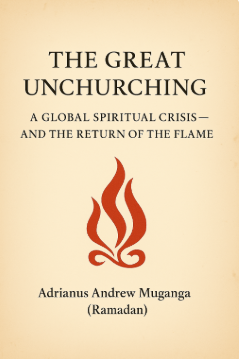
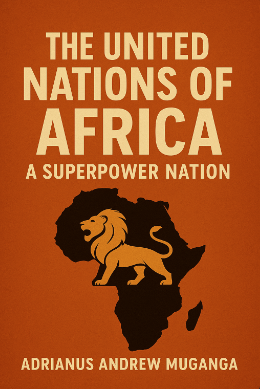
The Collected Works of Adrianus Andrew Muganga (Ramadan): An Official Annotated Catalogue of Scholarly Publications is the definitive bibliographic and interpretive record of the author's published scholarship. More than a conventional bibliography, this volume presents an integrated catalogue of fifty-one scholarly books together with selected research papers, journal articles, and professional publications, documenting the evolution of an interdisciplinary research program developed through sustained independent inquiry.
Designed as both a scholarly reference work and an interpretive guide, the catalogue provides readers with a comprehensive understanding of the author's intellectual development, research philosophy, and thematic contributions across multiple academic disciplines. Every publication is presented using a standardized annotated format that includes bibliographic information, publication details, abstracts, research themes, scholarly contributions, relationships to other works, and archival references. This systematic approach transforms the catalogue into an authoritative reference for researchers, librarians, educators, students, policymakers, and institutions seeking an organized overview of the author's complete body of work.
The volume begins by examining the origins and development of the author's research journey, demonstrating how initially specialized investigations gradually expanded into an integrated program of interdisciplinary scholarship. Early research focused primarily on agriculture and sustainable development, reflecting the author's academic background in agronomy and commitment to addressing practical challenges related to food security, environmental conservation, climate resilience, rural development, and sustainable resource management. These investigations established the empirical foundations upon which subsequent research programs were progressively developed.
As the research matured, its scope broadened to include governance, constitutional studies, institutional design, public administration, and leadership. These studies examined the legal and institutional frameworks through which societies organize public authority, promote accountability, strengthen democratic governance, and pursue sustainable development. Rather than treating governance as an isolated field, the publications explored its relationships with economic development, environmental stewardship, education, institutional effectiveness, and long-term public policy.
The catalogue also documents the emergence of systems thinking and civilization studies as central components of the author's scholarship. These publications investigate the patterns, relationships, and structures that shape complex human systems, emphasizing that contemporary challenges cannot be fully understood through isolated disciplinary perspectives. Instead, they advocate integrated approaches that recognize the interdependence of institutions, societies, economies, cultures, and natural systems. Through this perspective, systems thinking becomes one of the principal analytical frameworks connecting the diverse fields represented throughout the scholarly corpus.
Another major dimension of the collection explores philosophy, comparative religion, spirituality, ethics, and human consciousness. These works examine questions concerning meaning, moral responsibility, human dignity, remembrance, consciousness, and the search for truth across cultures and intellectual traditions. Rather than separating scientific and philosophical inquiry, the publications encourage constructive dialogue among diverse traditions of knowledge while emphasizing ethical reflection as an essential component of responsible leadership, institutional development, and sustainable societies.
The culmination of the scholarly corpus is represented by the author's extensive work on Pan-African Constitutional Architecture and the United Nations of Africa Project. This comprehensive research program integrates insights developed throughout the preceding publications into a systems-oriented framework for examining constitutional governance, institutional design, regional cooperation, public administration, and long-term continental development. Rather than presenting constitutional reform in isolation, these publications explore how interdisciplinary knowledge from agriculture, governance, systems science, development studies, environmental sustainability, philosophy, and ethics can contribute to discussions concerning Africa's institutional future. Within the overall corpus, this program represents the highest level of intellectual integration achieved through the author's published research.
A distinctive feature of this catalogue is its emphasis on intellectual continuity. Individual publications are not presented as independent works but as interconnected stages within an evolving program of scholarship. Cross-references throughout the annotations demonstrate how concepts introduced in earlier books are expanded, refined, synthesized, or applied in later publications. This integrated presentation enables readers to appreciate the cumulative development of ideas rather than viewing each publication in isolation.
The organization of the catalogue reflects this commitment to coherence. Introductory chapters establish the intellectual foundations of the research program before examining its five principal research domains: Agriculture and Sustainable Development; Governance and Constitutional Studies; Systems Thinking and Civilization; Spiritual Inquiry and Human Consciousness; and Pan-African Constitutional Architecture. Together, these thematic programs provide the conceptual framework through which the complete body of scholarship may be understood. Subsequent chapters present detailed annotated entries for each of the fifty-one books, followed by comprehensive bibliographic documentation, thematic indexes, publication chronology, and archival references.
Beyond documenting publications, this volume contributes to the preservation of independent scholarship by creating a permanent and authoritative bibliographic record. It supports accurate academic citation, institutional cataloguing, library acquisition, archival preservation, and future scholarly research. The standardized format adopted throughout the volume ensures consistency, accessibility, and long-term usefulness for readers across disciplines and institutions.
The catalogue also demonstrates the value of interdisciplinary inquiry in addressing complex societal challenges. Throughout the author's publications, recurring themes of sustainability, institutional effectiveness, systems integration, ethical responsibility, constitutional development, environmental stewardship, and human flourishing illustrate a continuing effort to bridge traditional disciplinary boundaries. The resulting body of work reflects an intellectual progression toward increasingly comprehensive models of analysis that recognize the interconnected nature of contemporary social, environmental, political, and developmental issues.
Intended for scholars, educators, librarians, policymakers, students, development practitioners, and general readers, The Collected Works of Adrianus Andrew Muganga (Ramadan) serves as both a bibliographic reference and a guide to an evolving interdisciplinary research program. It enables readers to understand not only the individual publications themselves but also the broader intellectual architecture that unites them.
As the official annotated catalogue of the author's published scholarship, this volume stands as a lasting documentary record of sustained independent research dedicated to advancing knowledge, encouraging critical inquiry, promoting interdisciplinary collaboration, and contributing constructively to discussions concerning sustainable development, governance, civilization, and the future of humanity. It is both a scholarly resource and a historical record of an integrated body of work developed in the service of learning, public engagement, and the responsible pursuit of knowledge.
#Annotated Bibliography
#Collected Works
#Scholarly Publications
#Academic Catalogue
#Research Bibliography
#Scholarly Catalogue
#Independent Scholar
#Interdisciplinary Research
#Academic Reference
#Bibliographic Catalogue
#Research Publications
#Systems Thinking
#Constitutional Studies
#Sustainable Development
#Governance Studies
#Pan-African Studies
#African Scholarship
#Academic Bibliography
#Research Archive
#Scholarly Reference